Featured in the essay Welcome to Beyond the Abstract.
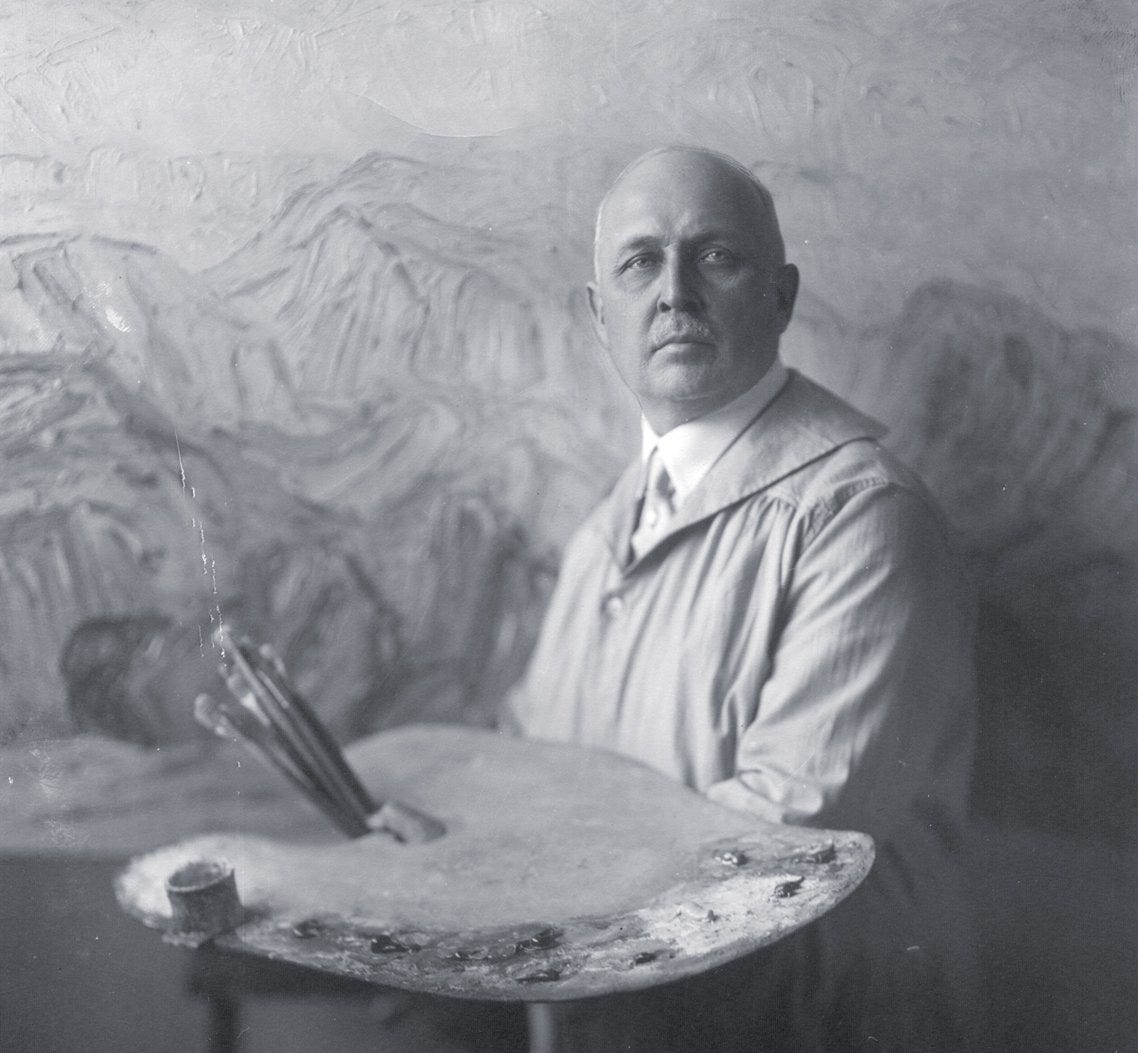
Born in Blidsberg, Sweden, landscape painter and printmaker Sven Birger Sandzén (1871–1954) was the son of a rural Lutheran preacher and an accomplished watercolourist. He studied under the celebrated Swedish painter Anders Zorn and became part of Stockholm’s lively art scene in the 1890s, joining the Artists League (Konstnärsförbundet) in 1891, whose independent school challenged the conservative traditions of the Royal Swedish Academy.
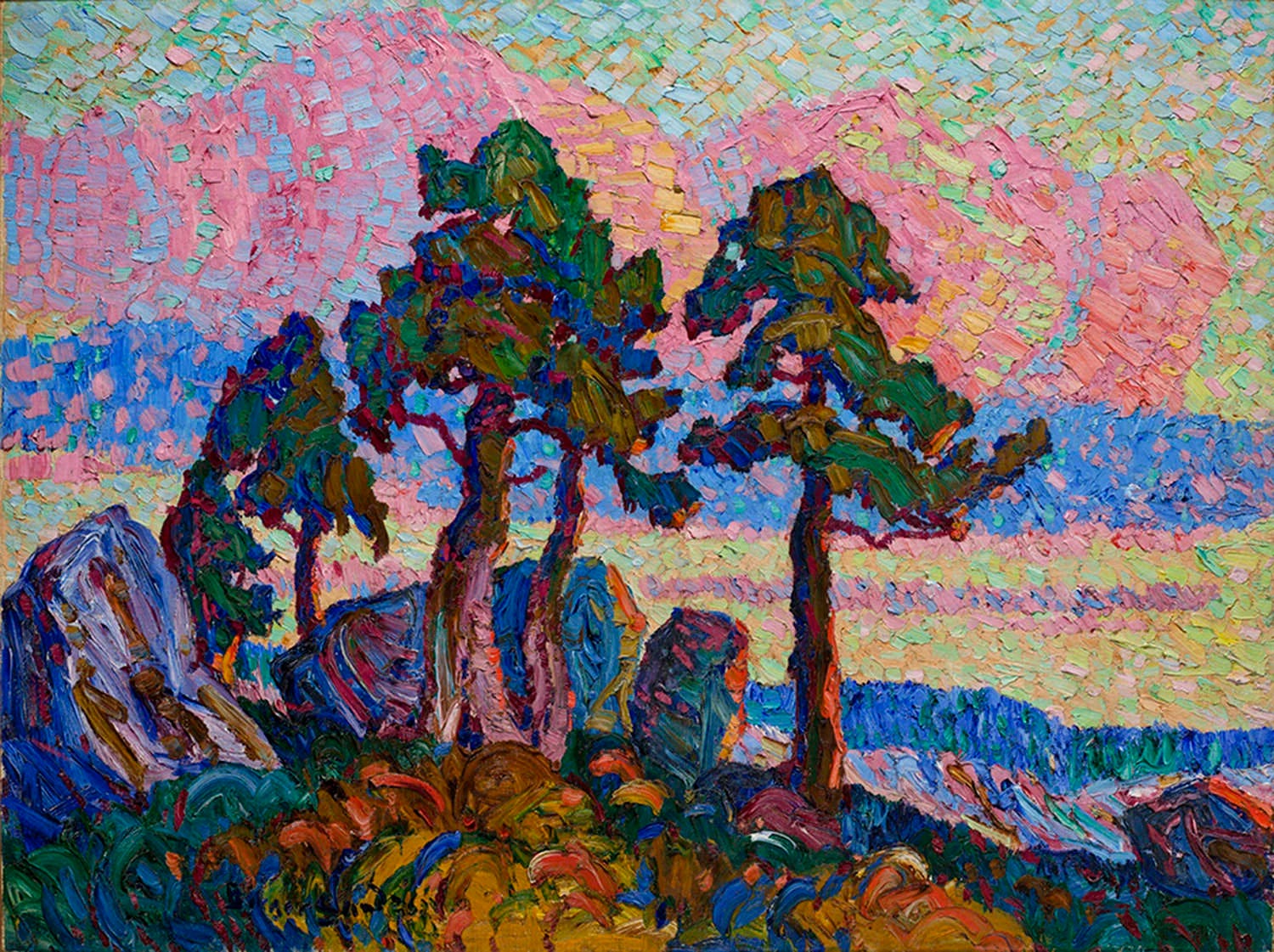
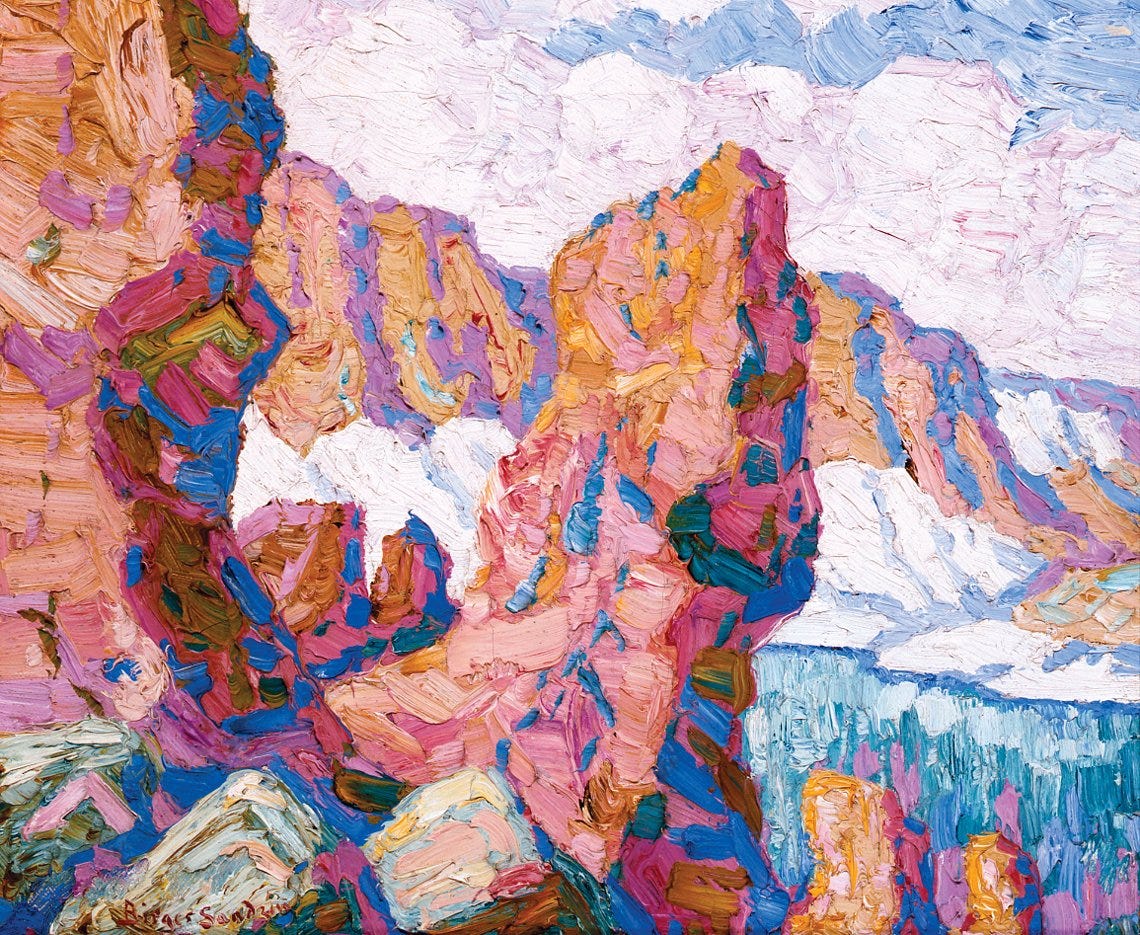
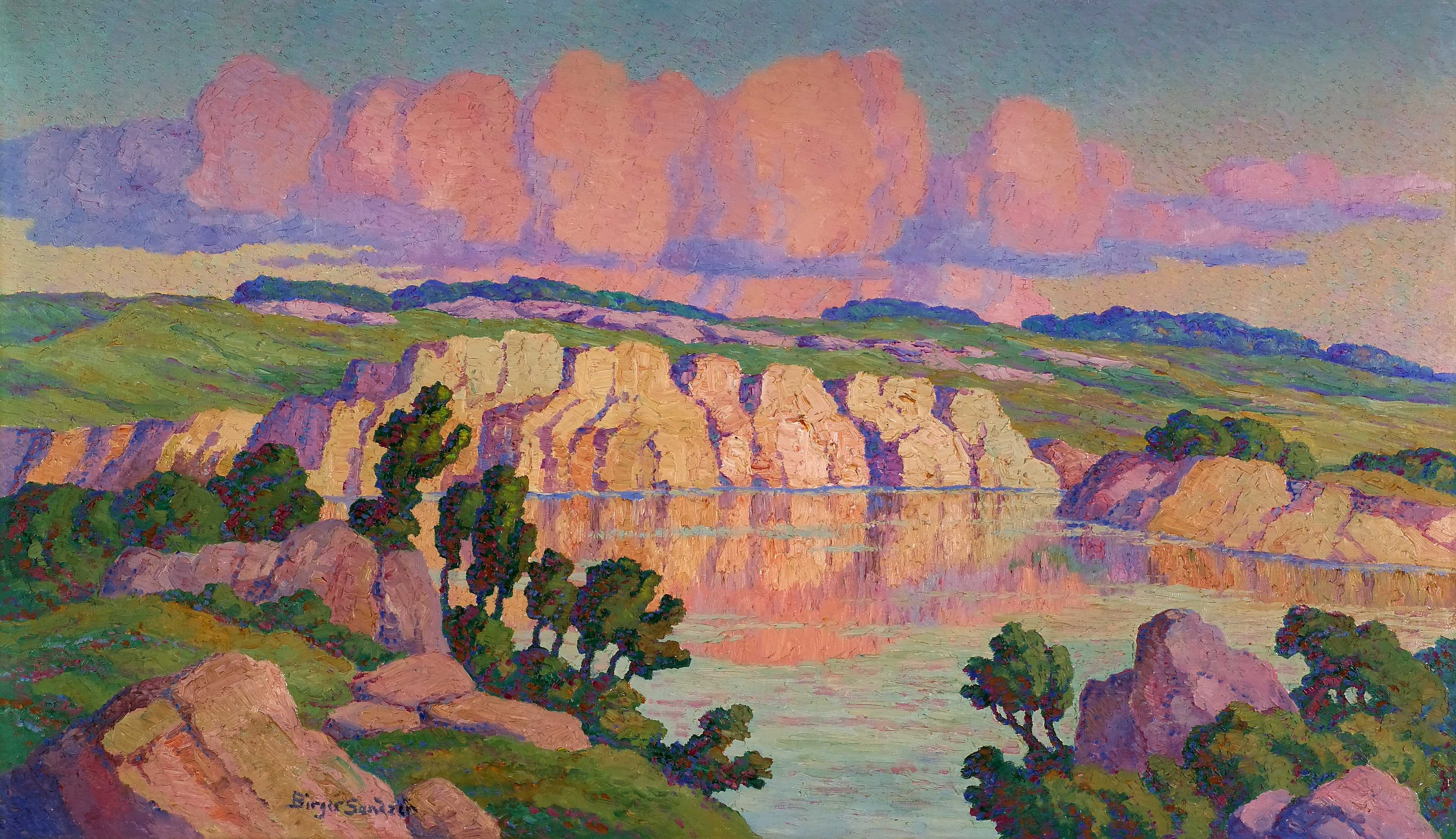
In 1894, Sandzén moved to Paris, where he encountered the emerging currents of European modernism. He studied under Edmond-François Aman-Jean and absorbed the semi-scientific colour theories of Divisionism, in which separate points or strokes of pure colour are placed beside one another to produce more vibrant, luminous effects when viewed from a distance. He was particularly influenced by the work of Paul Signac and Georges Seurat, whose experiments with colour and light would remain evident in his work throughout his career. Sandzén ultimately fused these European influences with the vigorous brushwork of Zorn and his own fascination with the dramatic landscapes of the American West.
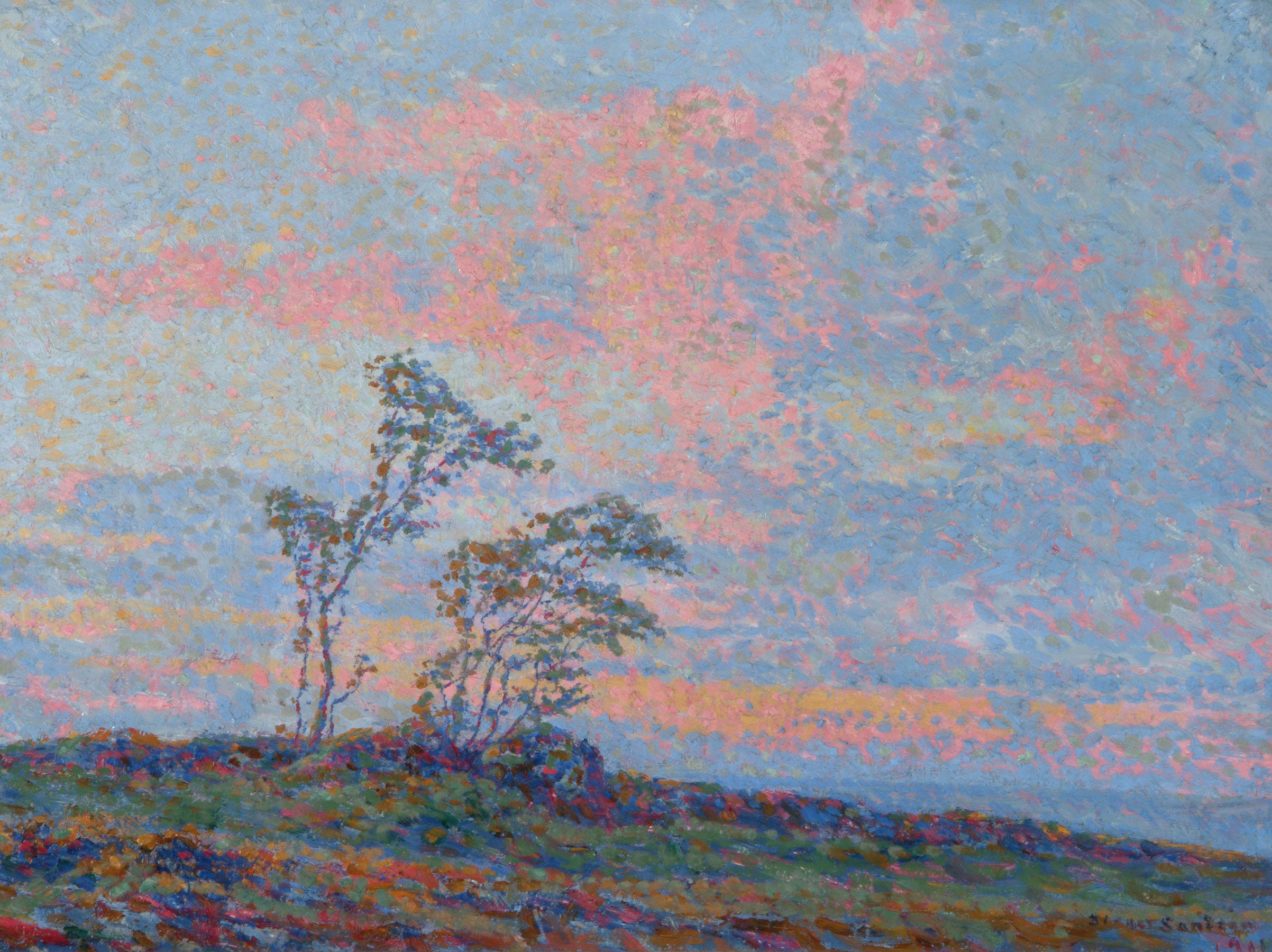
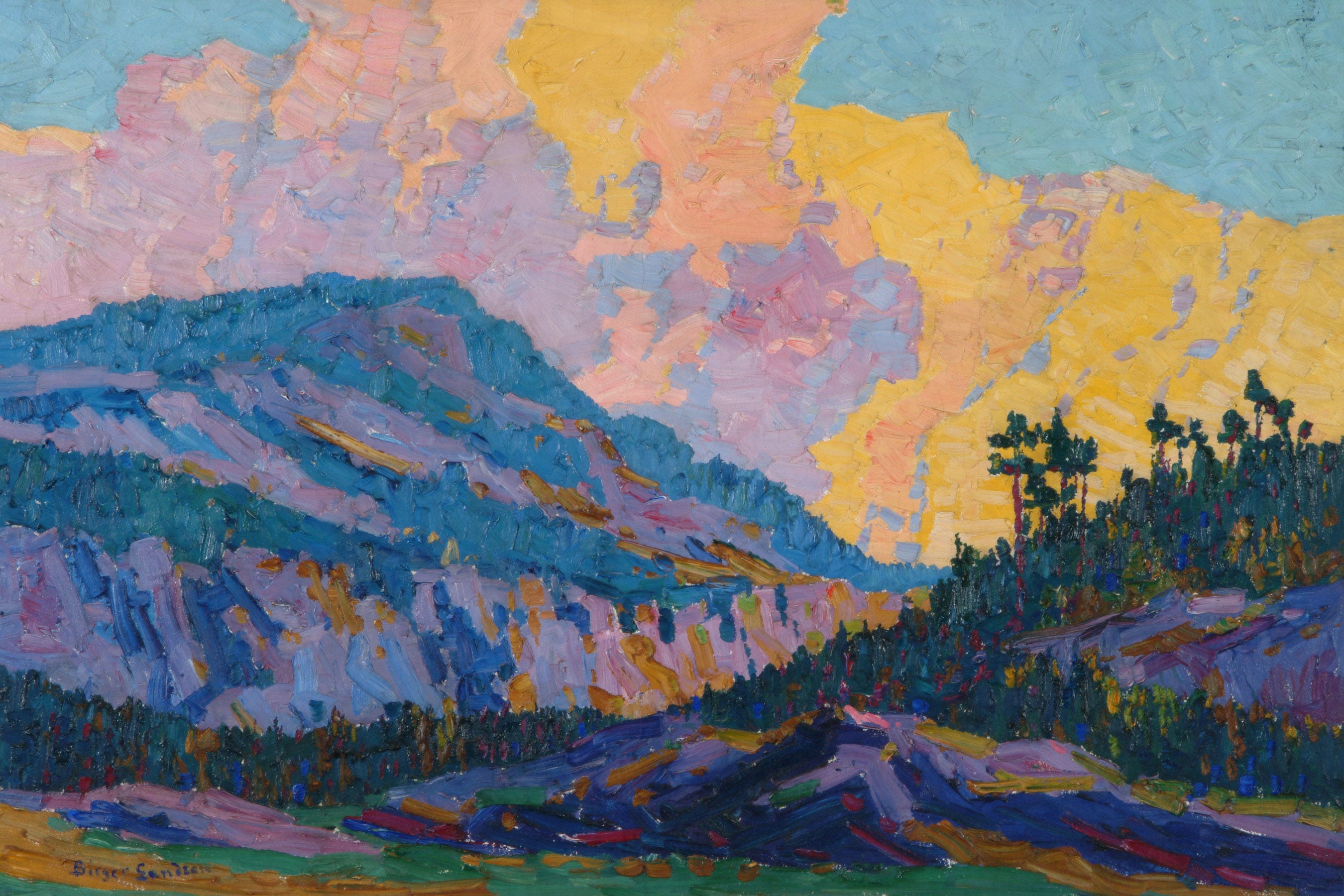
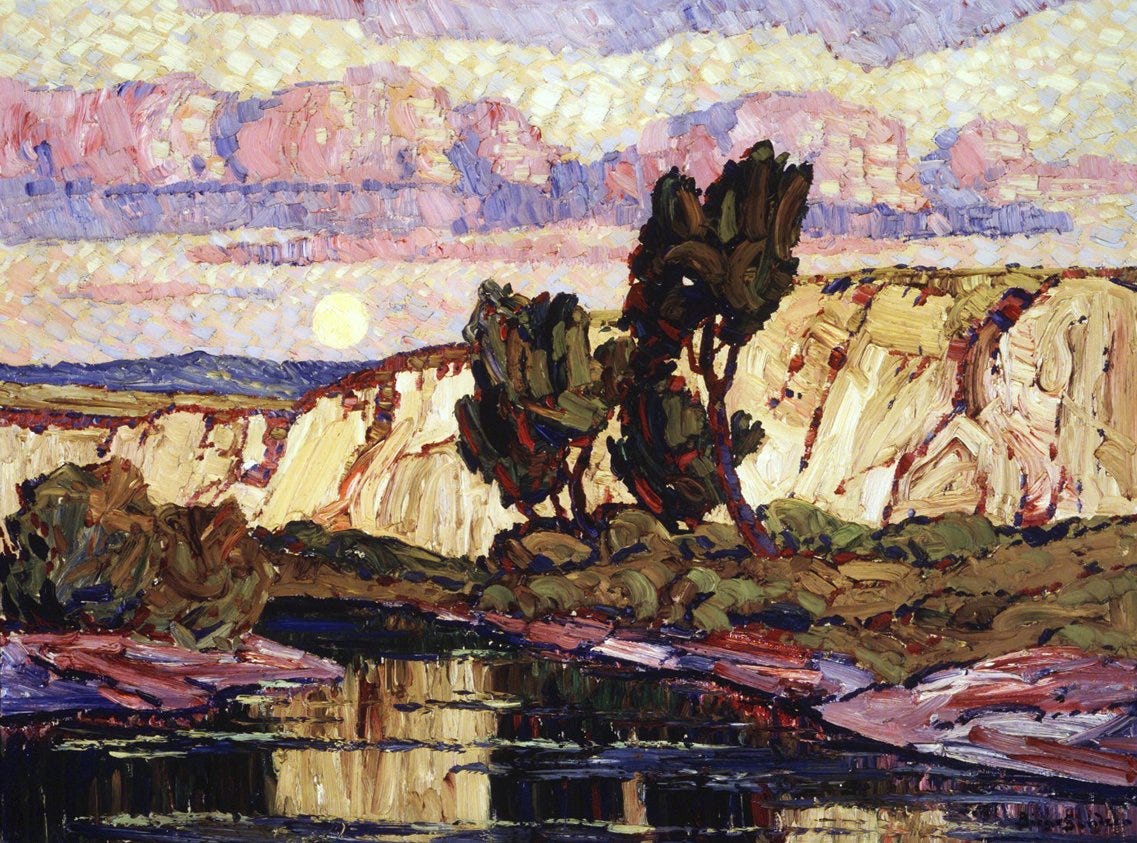
His great muse was the American landscape. After emigrating to the United States in 1894 and settling in Lindsborg, Kansas, Sandzén initially painted the surrounding prairie and rolling hills. A trip to Colorado in 1908 transformed his artistic direction. The Rocky Mountains offered the scale, geological drama, and changing light that would occupy him for the rest of his life. He returned repeatedly to Colorado and the Southwest, transforming mountains, rivers, forests, and rock formations into compositions of saturated colour and energetic, almost sculptural brushwork. In his later work, the distinction between landscape and abstraction begins to dissolve: the subject remains recognizable, but what matters increasingly is the sensation of light, colour, and movement.
Sandzén spent more than five decades in Kansas, teaching at Bethany College while continuing to paint and make prints. His work occupies an unusual position in American art: a Scandinavian-trained painter who carried the ideas of European modernism into the American West, and in doing so developed a distinctly personal vision of the landscape.