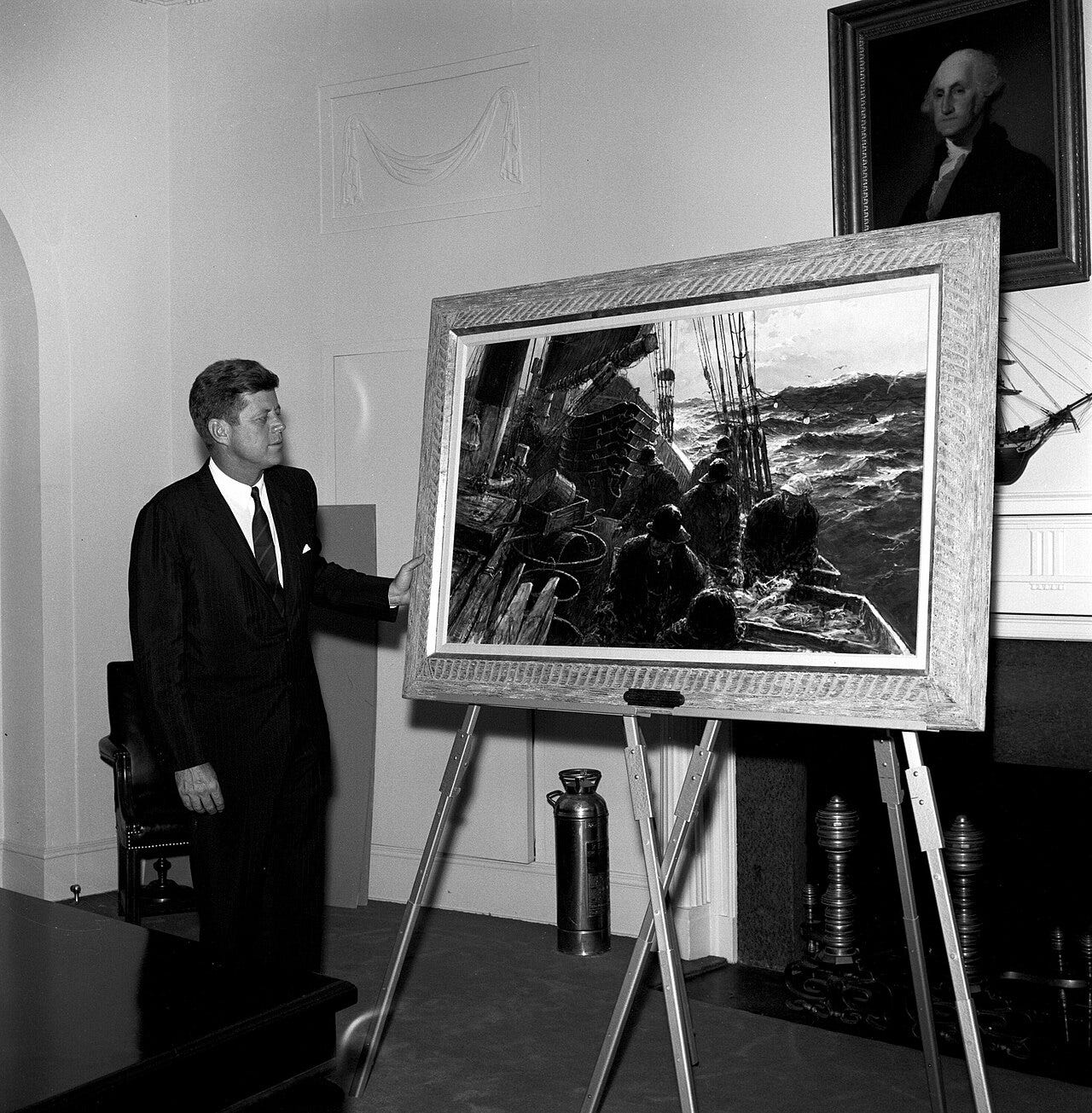
Featured in the essay Science is an Exploration, Not an Enterprise.
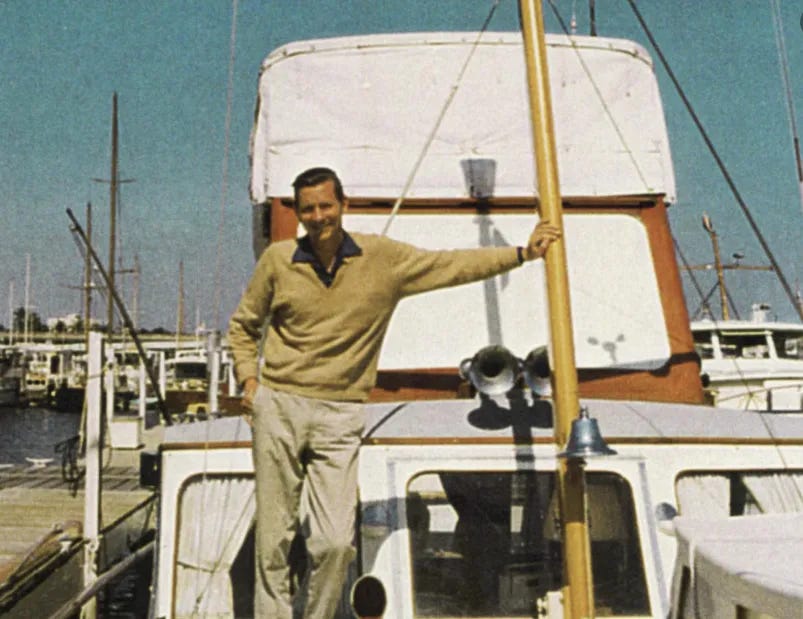
Born in Halifax, Nova Scotia, maritime painter Jack Lorimer Gray (1927–1981) developed an early fascination with the sea, spending his childhood sketching ships around Lunenburg Bay. His talent was recognized by the Canadian painter Edmund Wyly Grier, and after the Second World War he studied at the Nova Scotia College of Art, where he was mentored by Elizabeth Styring Nutt and David Whitzman. There he also met fellow Nova Scotian artist Joseph Purcell, with whom he would later travel and paint along the province’s coast.
In 1947, Gray and Purcell rented a loft above a fish store in New Harbour, Nova Scotia, using it as a studio while they explored the surrounding coast. The following year, Gray traveled to Montreal to study life drawing under Arthur Lismer, a member of the Group of Seven whose paintings had helped establish a distinctly Canadian approach to landscape. Gray, however, was more interested in the boats outside the classroom than the human figure inside it. During one class, he was found sketching a boat hull instead of the model. The episode became emblematic of an artist whose attention was already firmly fixed on the maritime world.
Gray soon left formal art education to spend several seasons working aboard Nova Scotia’s dory-fishing schooners. The experience transformed his relationship with his subject. Rather than observing boats and fishermen from shore, he learned their construction, movement, and daily rhythms firsthand, accumulating sketches, photographs, and notes that would form the basis of his early paintings. His first major solo exhibition, held in Chester in 1948, established him as a promising young maritime painter.
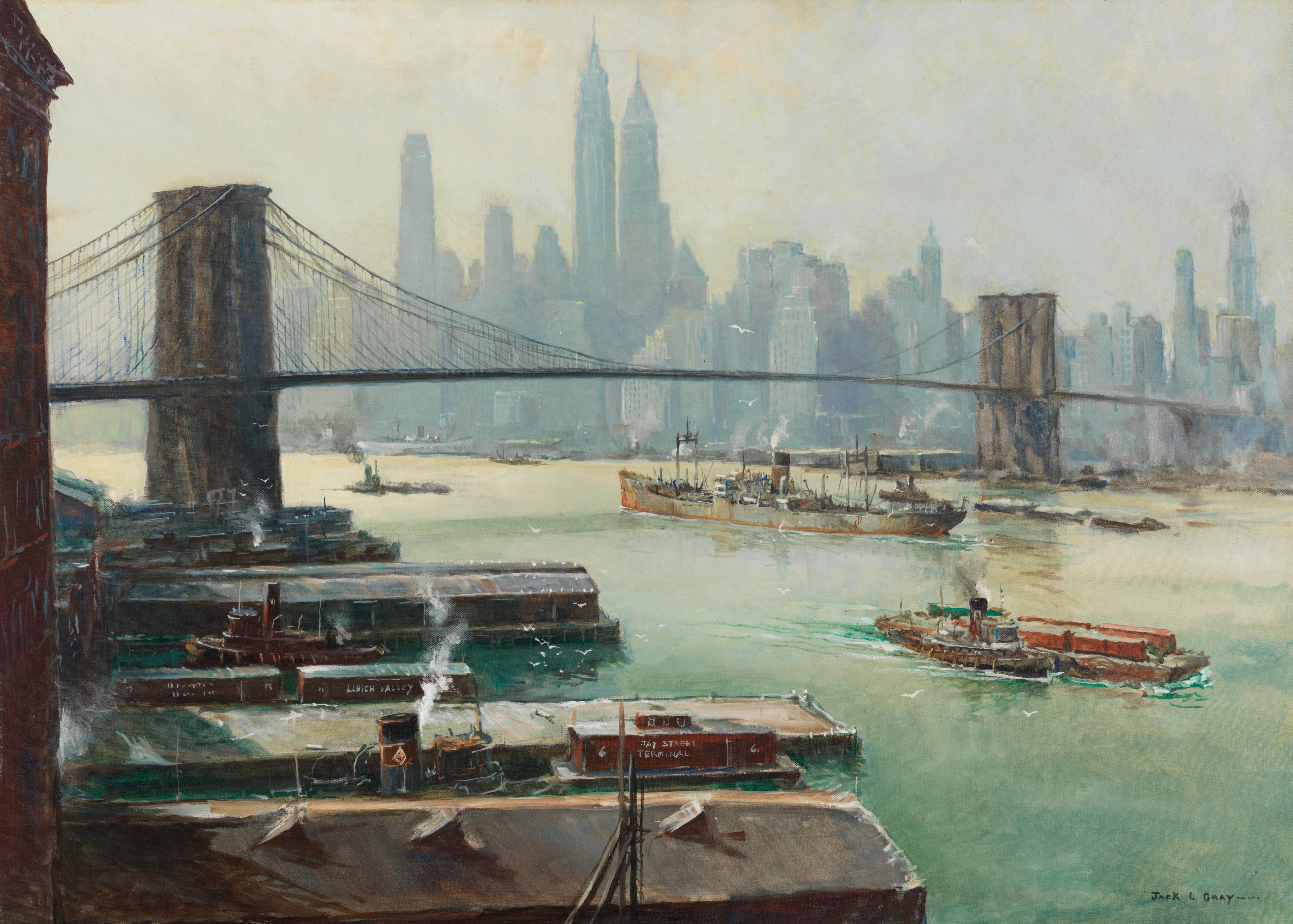
The sea remained Gray’s great subject, but his surroundings changed throughout his career. In the early 1950s he often lived aboard boats that doubled as floating studios. After moving to New York in the middle of the decade, he turned his attention to the city’s harbor, painting tugboats, steamships, and working waterfronts from a small skiff. The resulting New York Harbor Collection brought him a wider American audience and demonstrated how naturally his maritime perspective could extend from the fishing villages of Nova Scotia to one of North America’s busiest industrial harbors.
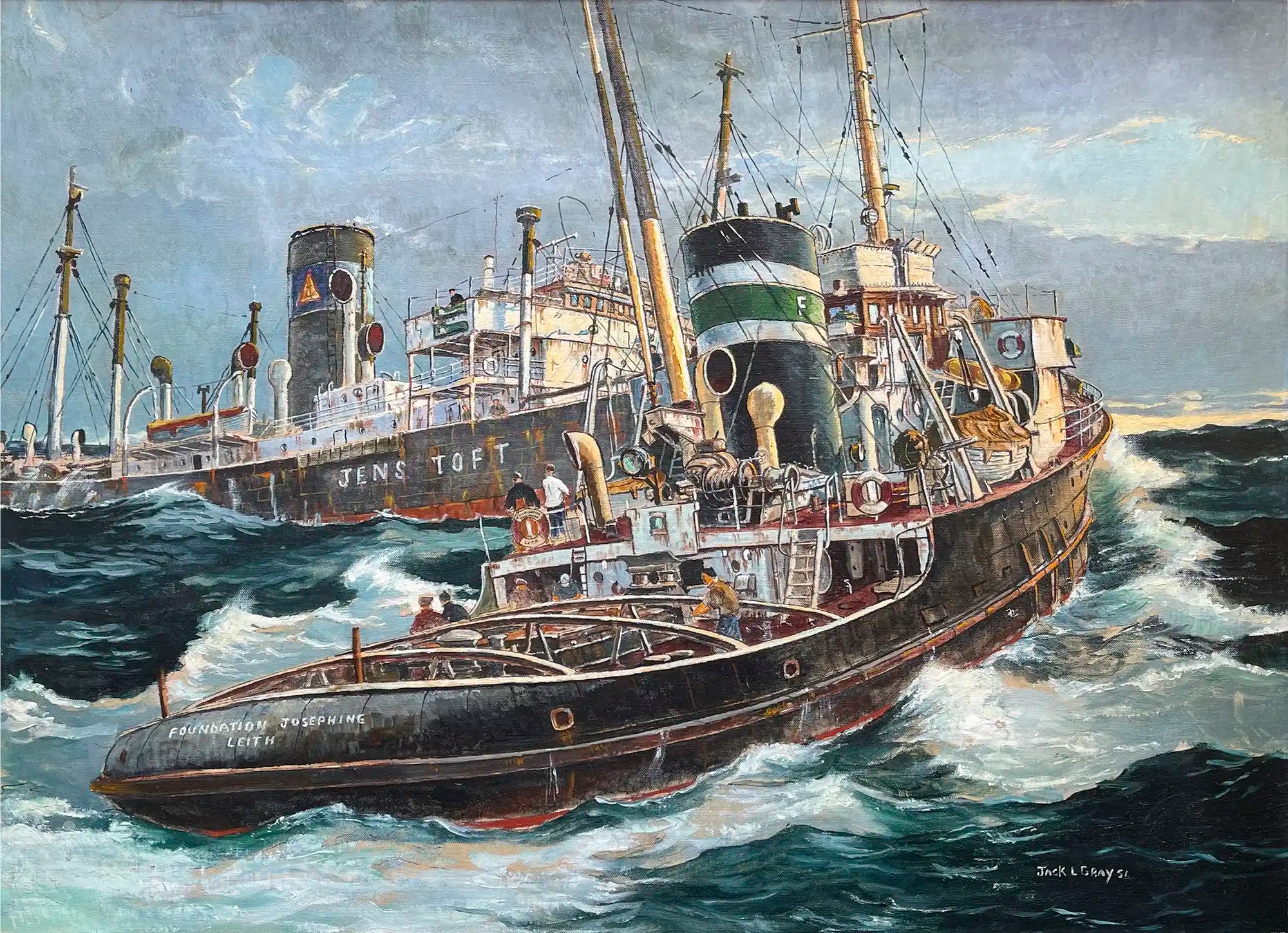
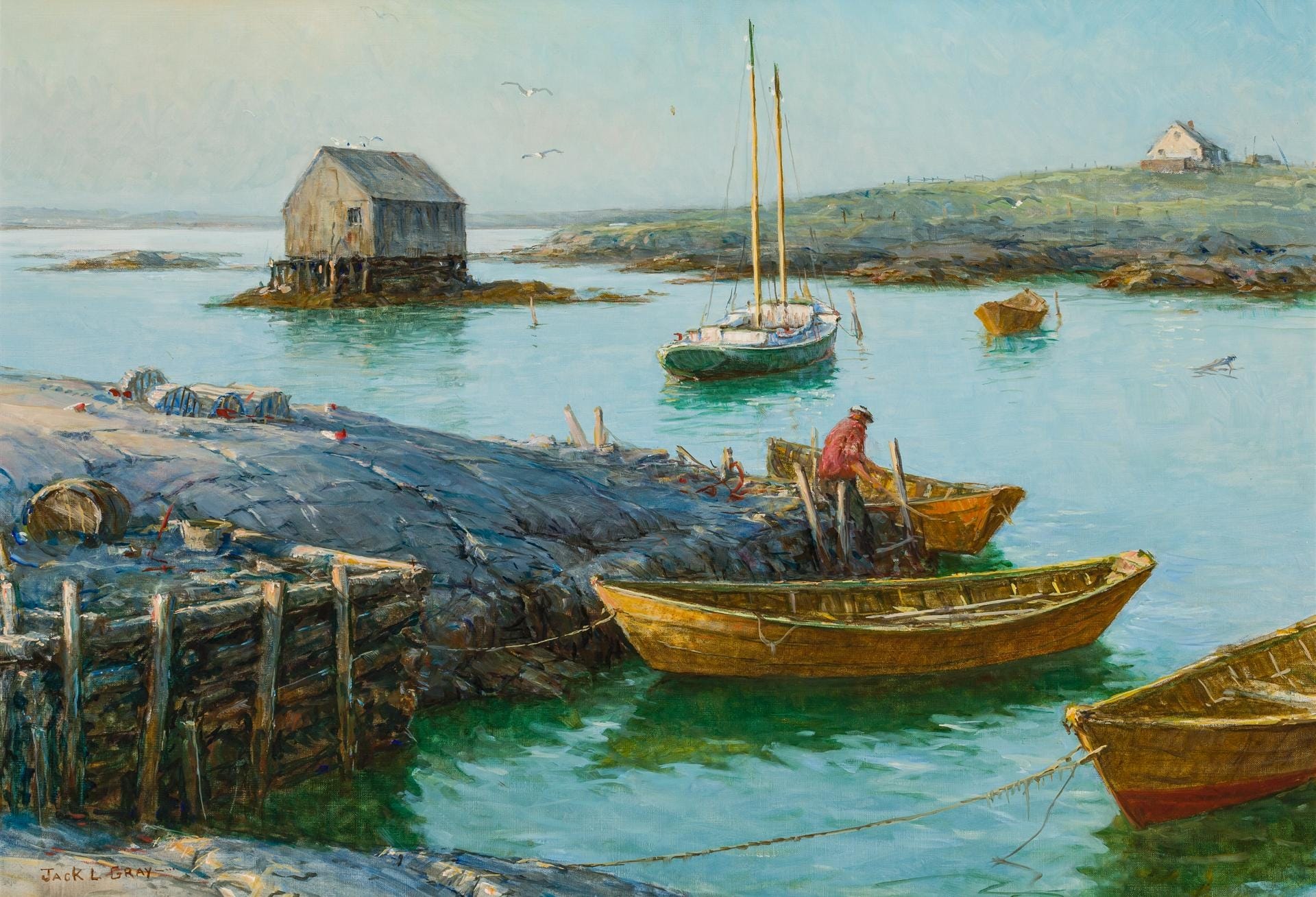
Gray eventually returned to Nova Scotia, although he continued to travel and paint in Maine, Florida, and the Bahamas. His work remained grounded in the subjects he had known since childhood: working boats, sailors, harbors, and the changing conditions of the sea. Unlike many artists whose distinctive style emerged primarily through formal experimentation, Gray developed his perspective through immersion in his subject. His years at sea gave his paintings a particular physical accuracy, while his training under Lismer and his early associations with other Canadian artists provided a broader artistic foundation.
Gray’s work occupies an unusual place in Canadian art. He was trained within the country’s emerging modernist tradition, but his artistic identity was shaped less by movements than by experience. He did not simply paint the sea; he sailed it, worked on it, and repeatedly returned to it. His distinctive contribution was therefore not a radical new visual language, but an unusually intimate understanding of the maritime world he chose to depict.